The bus from Aomori takes nearly two hours. From Hachinohe it’s longer. There’s no train station at the lake — the nearest shinkansen stop is 35 minutes away by bus, and that bus runs only in certain seasons. For a country that has perfected the infrastructure of tourism, Lake Towada is conspicuously inconvenient to reach. This is not an accident. The lake sits inside a caldera in the mountains of northern Tohoku, ringed by walls of ancient volcano, and getting there requires a little effort. That effort is, it turns out, most of the point.
What you find when you arrive is a lake that doesn’t look quite real. The Japanese have a name for the colour — Towada Blue — and it refers to the way the water shifts between deep indigo and transparent aquamarine depending on the angle of light. The lake is 327 metres deep at its deepest point. Nothing drains into it except rainfall and snowmelt from the surrounding mountains. What flows out is the Oirase Stream, which carries that cold, clear water 14 kilometres through one of the most beautiful gorges in the country. The lake and the gorge are inseparable — you don’t visit one without the other.
What Makes Lake Towada Different
Most of Japan’s famous lakes — Kawaguchi, Biwa, Ashi — sit in landscapes shaped significantly by tourism. Lake Towada sits inside Towada-Hachimantai National Park, which means development on the shoreline is tightly controlled. The main visitor area at Yasumiya on the south bank has a handful of restaurants, guesthouses, and a small boat pier. That’s essentially it. The rest of the shoreline is forested caldera wall, uninterrupted for several kilometres in every direction.
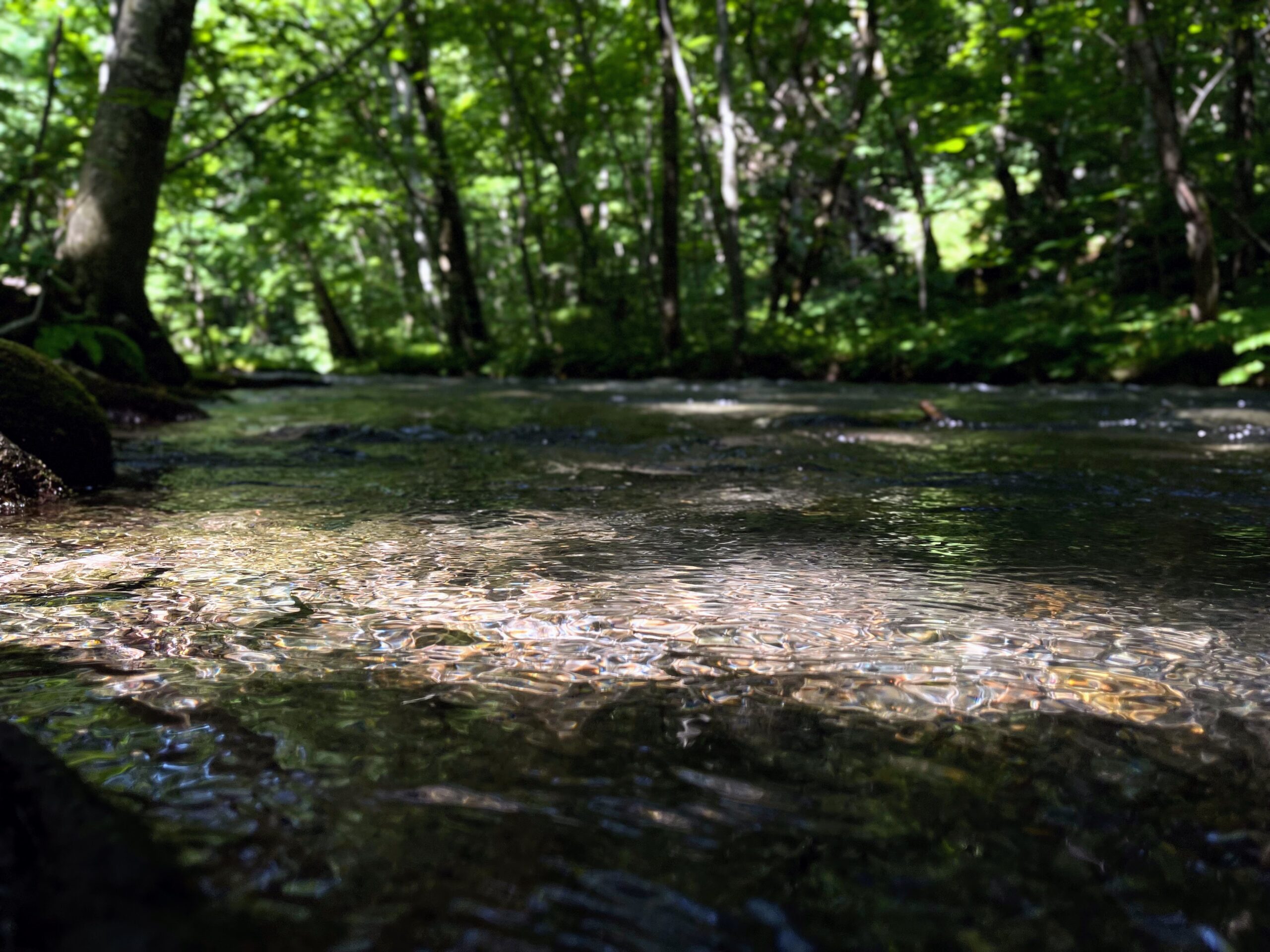
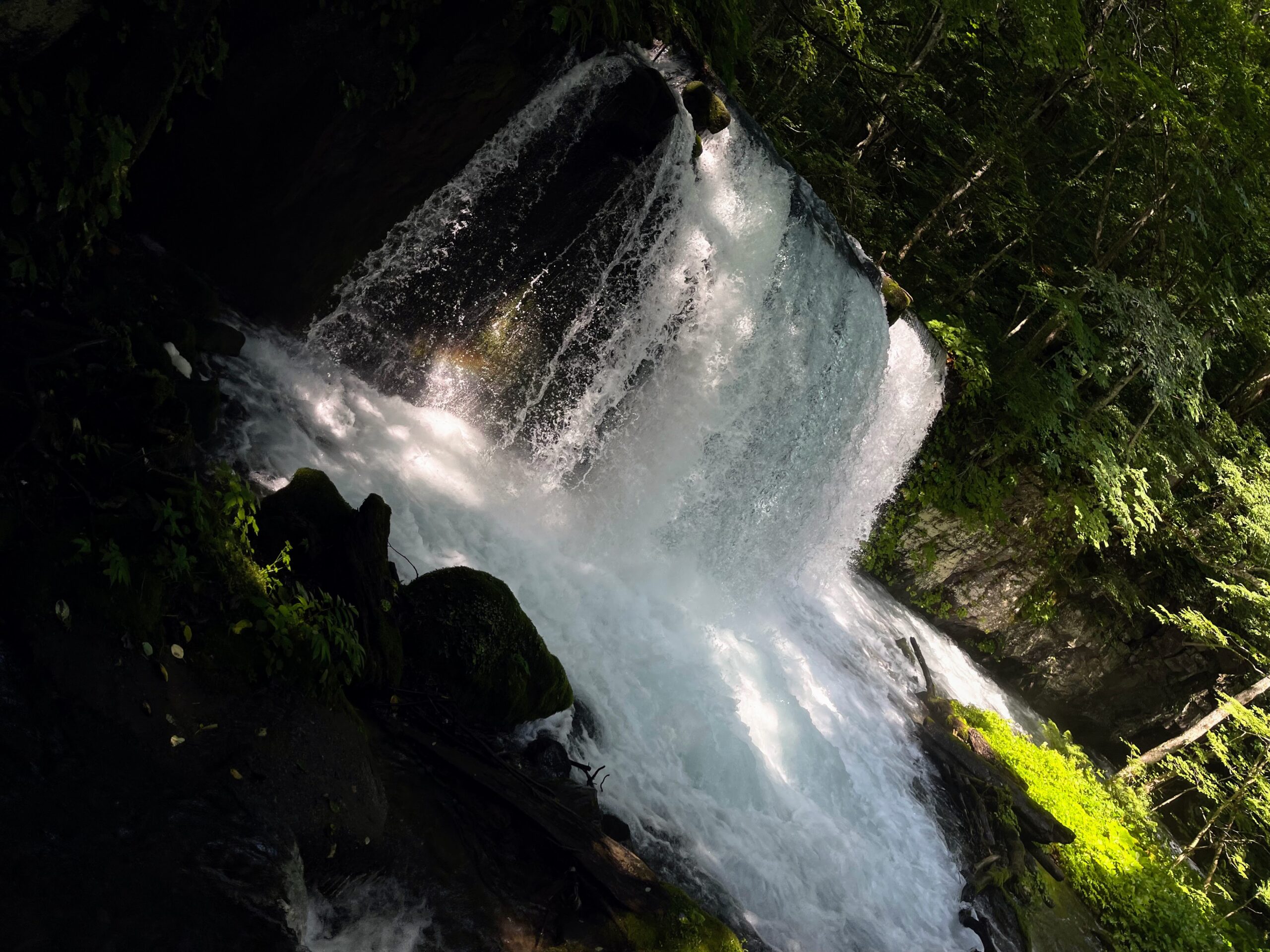
The other difference is the Oirase Gorge. Most mountain streams are beautiful in a general way. Oirase is specific — a 14-kilometre path through a cedar and beech forest, alongside a stream so clear you can read the colour of individual stones through two metres of water. Fourteen major waterfalls feed into the gorge along the walk. The moss covering every rock face is an almost aggressive shade of green. In autumn the canopy turns gold and red above you; in summer the air above the water is noticeably cooler than the surrounding forest; in winter, when the buses stop running, the few people who make the effort find the whole gorge silent under snow.
What to Do at Lake Towada
Walk the Oirase Gorge. The most rewarding section runs 9 kilometres between Nenokuchi (at the lake outlet) and Ishigedo, taking roughly 2.5 hours at an unhurried pace. The terrain is almost entirely flat — this is not a hike so much as a long walk through one of the most beautiful places in the country. Arrive at Nenokuchi by the first bus from the lake and walk toward Ishigedo; buses stop at regular intervals along the gorge, so you can exit whenever you’ve had enough. The first hour of morning, before day-trippers arrive, is when the gorge is at its quietest and most atmospheric.
Find the Maiden Statues. At Yasumiya on the south shore, sculptor Kotaro Takamura’s Otome no Zo — two bronze figures standing back-to-back on the lakeshore — have been here since 1953. Most visitors walk straight to them and photograph them from the front. Few walk around to the back, where the statues face the open lake and the view is the one Takamura intended. Come early in the morning before the tour coaches arrive; the statues and the lakeshore are genuinely moving when you have them to yourself.
Take the boat out. Cruise boats run from Yasumiya between late April and early November, circling the lake over 50 minutes. The lake is large enough — about 55 square kilometres — that from the middle of it, the forested caldera walls rise in every direction and there is nothing else visible. It’s an unusual experience for Japan: no city, no road, no human structure of any kind, just forest and water and sky. Canoe tours are also available for those who want to move at their own pace along the shoreline.
Visit Towada Shrine. A short walk through cedar forest from the Yasumiya visitor area leads to a small shrine that has been here in various forms for centuries. The path is quiet and the shrine itself modest, but the trees surrounding it are enormous — some appear to be several hundred years old — and the atmosphere is noticeably different from the busy lakeshore. Worth 30 minutes of anyone’s time.
Soak at Tsuta Onsen. Fifteen kilometres west of the lake, deep in the South Hakkoda mountains, Tsuta Onsen is a single old inn built over a spring that has been used for roughly a thousand years. The most famous feature is a bath where the hot water wells up through the wooden floor itself — gensenwakinagashi, unfiltered and unchlorinated, rising directly from the earth. Day use is available. This is among the most atmospheric hot springs in Tohoku, and almost no English-language travel writing mentions it. Come in the morning before the inn’s guests have vacated the baths.
When to Go
Late May to mid-June is the quietest comfortable season. The gorge is intensely green, the snow has cleared from the roads, the buses are running, and the summer crowds haven’t arrived. This is the best window for the Oirase walk without competition from other visitors.
Late October to early November is peak autumn foliage — the gorge is spectacular, but heavily visited. If you go during this window, stay overnight at the lake and walk the gorge at dawn, before the first buses arrive from Aomori. The difference between a 7am and a 10am walk on a Saturday in late October is significant. Book accommodation months ahead; the area fills up quickly.
Winter (mid-November to late April) sees the public buses stop running entirely. The gorge and lake become very quiet — not impossible to reach by car, but requiring winter tyres and careful attention to road conditions. The reward is a Oirase Gorge that almost nobody sees: frozen waterfalls, snow-blanketed moss, complete silence except for the stream running beneath the ice.
In summer, on clear mornings in June and July, sea-of-clouds effects appear over the lake as viewed from the caldera rim lookouts. The window is roughly 5:30am to 7am. It requires clear skies after a cool night and cannot be guaranteed, but those who catch it describe it as one of the more memorable sights in northern Japan.
Getting There
By car is by far the most flexible option. From Aomori City, allow 1 hour 40 minutes. From Hachinohe, about 1 hour 30 minutes. From Sendai, approximately 3 hours. Winter tyres are mandatory from roughly November to April.
Without a car: Take the Tohoku Shinkansen to Shichinohe-Towada Station (about 3 hours 20 minutes from Tokyo), then a JR bus toward Towadako — approximately 35 minutes to the lake. Alternatively, buses run from Aomori Station and Hachinohe Station to Yasumiya (the main lakeside visitor area). Bus services operate seasonally from late April to early November; check the JR Bus Tohoku timetable carefully before planning your trip, as schedules vary significantly by month.
Bicycle rental is available at three points along the Oirase Gorge for ¥1,000 for four hours — a good option for covering the gorge quickly or reaching the lake from Ishigedo without backtracking on foot.
Where to Stay
Staying on the lake or in the gorge — rather than commuting from Aomori — makes a fundamental difference to the experience. Day visitors share the Oirase walk with everyone else. Guests who stay overnight have the gorge at dawn to themselves.
Hoshino Resorts Oirase Keiryu Hotel sits directly on the gorge — the only accommodation actually inside the Oirase valley. It’s upscale and not cheap, but the location is unmatched: you step out of the hotel and are immediately on the walking trail. The hotel runs early-morning guided walks for guests before public buses start running.
Towada Hotel is a historic property on the south shore of the lake, originally built in 1938. Quieter and more understated than the Hoshino property. The lakeside location means you can walk to the Maiden Statues and Towada Shrine within minutes.
For a more austere experience, Tsuta Onsen Ryokan — the single inn at Tsuta — takes overnight guests in a small number of traditional rooms. Staying here is closer to staying in a forest than staying in a hotel. Reserve well in advance; it fills up quickly.
Quick Facts
| Location | Towada City, Aomori Prefecture / Kazuno City, Akita Prefecture (straddles both) |
| Lake entry | Free. No admission to lakeshore or gorge trail. |
| Cruise boat | ~¥1,400 adults. Late April – early November. |
| Oirase walk | 9 km (Nenokuchi → Ishigedo). ~2.5 hrs. Almost flat. |
| Bike rental | ¥1,000 / 4 hours. 3 stations along the gorge. |
| Tsuta Onsen day use | Available. Check current hours with the inn directly. |
| Best season (quiet) | Late May – mid-June. Gorge green, crowds thin. |
| Best season (foliage) | Late Oct – early Nov. Spectacular but crowded — stay overnight. |
| Winter access | By car only (winter tyres required). No public bus mid-Nov – late April. |
| From Tokyo | ~3h 20min shinkansen to Shichinohe-Towada + 35min bus |
| From Aomori City | ~1h 40min by car / ~2h by bus (seasonal) |
| From Hachinohe | ~1h 30min by car / ~2h by bus (seasonal) |
The inconvenience is the feature. Lake Towada exists in something like its original state because getting there has always required a decision — a commitment to go somewhere that doesn’t come to you. The caldera walls that make it hard to reach are the same walls that keep the development out. Come in the early morning, walk the gorge before the buses arrive, swim if the season allows, and understand why the people who find this place tend to come back.